

Scientific Innovation
Exploring genetic strategies to reduce the ability of mosquitoes to transmit parasites.
Myth
You can get malaria from eating oily food or staying in the sun.
Fact
Malaria is only transmitted through the bite of an infected female mosquito.
Myth
Malaria is just a “normal” fever.
Fact
Malaria is a leading killer in Africa; it requires professional medical diagnosis and treatment.
Exploring genetic strategies to reduce the ability of mosquitoes to transmit parasites.
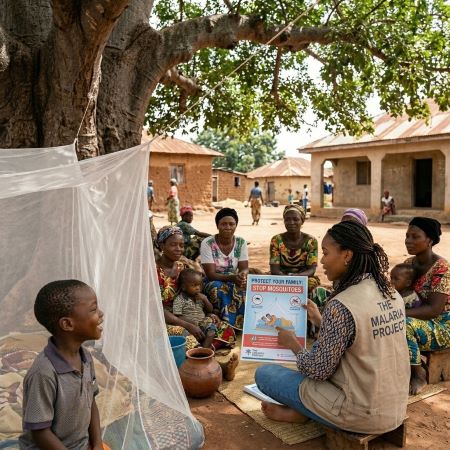
Partnering with local clinics and schools to deliver life-saving prevention training.

Improving real-time reporting and monitoring to track progress across regions.
If you or a loved one experience the following, seek medical attention at a partner clinic immediately:
This page is for general information and is not medical advice. If you suspect malaria, get tested at a clinic.
While we work on long-term genetic solutions, we encourage a multi-layered approach:
Genetic attenuation is a scientific method in which we modify the genetic makeup of mosquitoes so they can no longer carry or transmit the malaria parasite. Instead of using toxic chemicals to kill mosquitoes, we “thin out” dangerous wild populations by replacing them with mosquitoes that are biologically incapable of spreading disease. This creates a permanent, self-sustaining shield for the entire community.
No. One of the most important safety features of our project is that we only release male mosquitoes. Male mosquitoes do not bite humans; they feed exclusively on flower nectar. Because they do not bite, they cannot transmit any diseases or altered genes to your family. Their only role is to mate with wild females so the next generation of mosquitoes cannot carry malaria.
Bed nets and sprays are helpful, but they have limits. Mosquitoes are developing resistance to pesticides, and nets only protect you while you are underneath them. Our genetic strategy works around the clock, protecting everyone in the community, whether they are playing outside, working or sleeping. It is a proactive solution that stops the disease at the source rather than just reacting to it.
Traditional malaria control often relies on heavy pesticide use, which can contaminate water, harm local wildlife and disrupt ecosystems. The Malaria Project is a “biocompatible” solution. By using the mosquitoes’ own biology to stop the parasite, we eliminate the need for harmful chemicals, keeping the Nigerian environment healthy while we work to make the population malaria-free.
Hi there, how can we help? Chat with us on WhatsApp and we’ll get back to you shortly.
Start Chat